
 Alok Vivan
After cooking a delicious meal, the last thing you want is a blocked kitchen sink ruining your cleanup routine. Kitchen sink blockage happens because food particles, grease, and oil solidify in your pipes, creating stubborn clogs that slow down or completely stop drainage.
This guide is perfect for busy home cooks, working parents, and anyone who needs a quick fix without calling expensive plumbers. You’ll discover the common causes that lead to kitchen sink blocks after cooking, plus learn to spot early warning signs before they become major problems. We’ll also walk you through proven 5-minute home remedy solutions using everyday household items, so you can get your sink flowing smoothly again without breaking the bank or waiting for professional help.
Common Causes of Kitchen Sink Blockage After Cooking
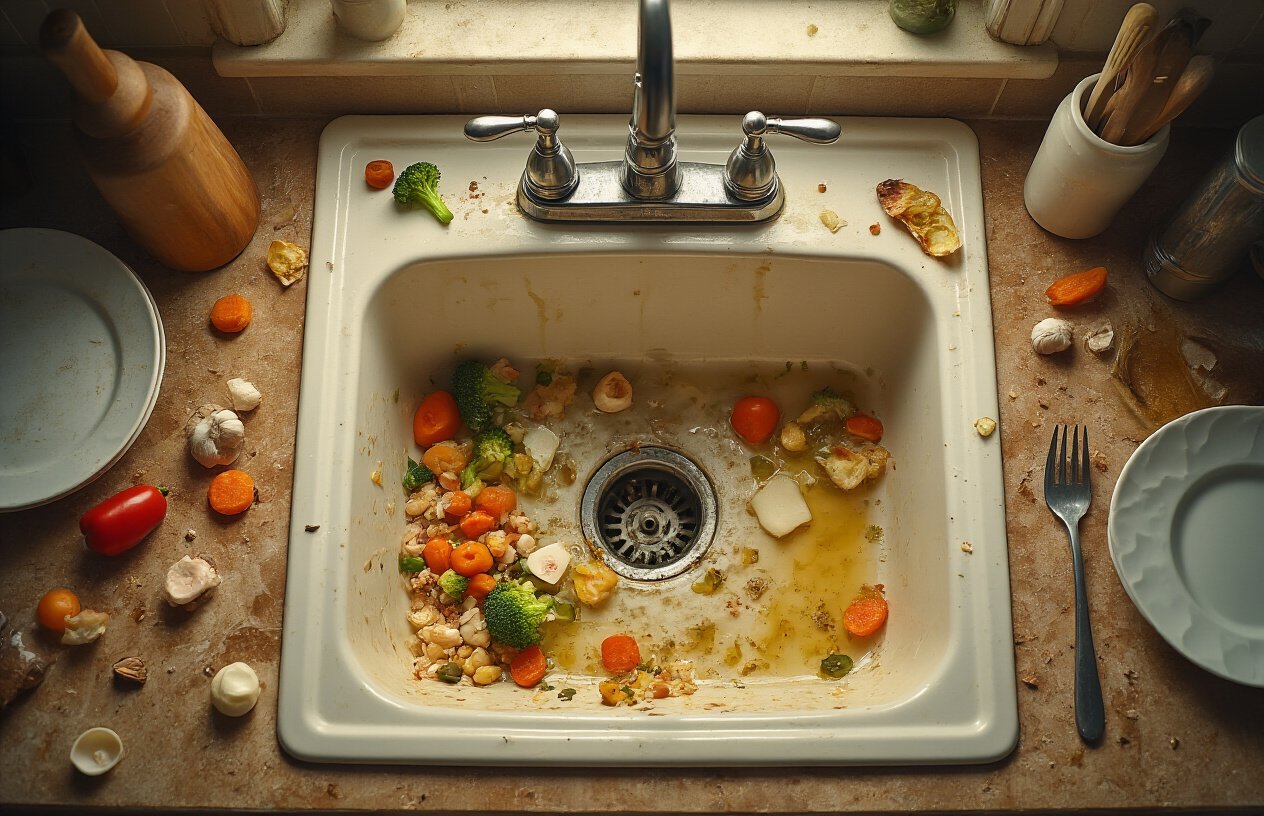
Food particles and grease buildup in drain pipes
Food scraps are the biggest culprits behind kitchen sink blockages. Even tiny bits of rice, pasta, or vegetable peels can accumulate over time and create serious clogs. These particles stick to the pipe walls and create a foundation for bigger problems.
Grease acts like glue in your drainage system. When you wash greasy pans or plates, the fat flows down the drain as a liquid but quickly solidifies as it cools. This creates a sticky coating inside your pipes that traps everything else that goes down the drain. Rice water, dal residue, and curry leftovers all contribute to this messy buildup.
The combination becomes particularly problematic because organic matter starts decomposing inside the pipes, creating an unpleasant smell and attracting bacteria. Most people don’t realize that even seemingly harmless liquids like milk or coconut milk can contribute to this greasy accumulation.
Oil solidification creating stubborn clogs
Cooking oil is probably the worst thing you can pour down your kitchen sink. Whether it’s mustard oil, coconut oil, or ghee, all fats solidify at room temperature and create rock-hard blockages that are incredibly difficult to remove.
Different oils behave differently in your pipes:
| Oil Type | Solidification Rate | Clog Severity |
|---|---|---|
| Coconut Oil | Fast (below 76°F) | Very High |
| Ghee/Clarified Butter | Medium | High |
| Mustard Oil | Slow | Medium-High |
| Vegetable Oil | Very Slow | Medium |
When oil mixes with cold water in your pipes, it hardens almost instantly. This creates layers of solid fat that build up over weeks and months. Hot water might seem like it helps, but it only pushes the problem further down the pipe where it will solidify and cause bigger headaches.
Soap scum mixing with food debris
Dishwashing soap creates its own problems when mixed with food particles. The soap doesn’t just wash things away – it can actually bind with grease and food debris to create a thick, paste-like substance that’s harder to clear than either component alone.
Bar soap is particularly troublesome because it contains fats that can combine with the food grease already in your pipes. Even liquid dish soap can create issues when used in large quantities or when it mixes with hard water minerals.
This soapy mixture acts like cement for food particles. Small bits of onion skin, tea leaves, or spice remnants get trapped in this sticky mess and gradually reduce your pipe diameter until water can barely flow through.
Small utensils or debris accidentally dropped down the drain
Sometimes the blockage isn’t gradual – it’s sudden and complete. Bottle caps, small spoons, jewelry, or even large food chunks can create instant blockages that stop your sink drainage completely.
Common items that accidentally go down kitchen drains:
- Tea strainer parts
- Small measuring spoons
- Rubber bands from vegetable bundles
- Plastic bottle caps
- Large pieces of onion skin or potato peels
- Pieces of broken glass or ceramic
These solid objects don’t just block the drain themselves – they create a dam that catches everything else flowing down. Hair, food particles, and grease all pile up behind these accidental barriers, making the blockage much worse than it would be from just the original item.
Even something as small as a ring or earring can cause major drainage problems because it changes the flow pattern in your pipes and creates turbulence that allows other debris to settle and stick.
Warning Signs Your Kitchen Sink is About to Block
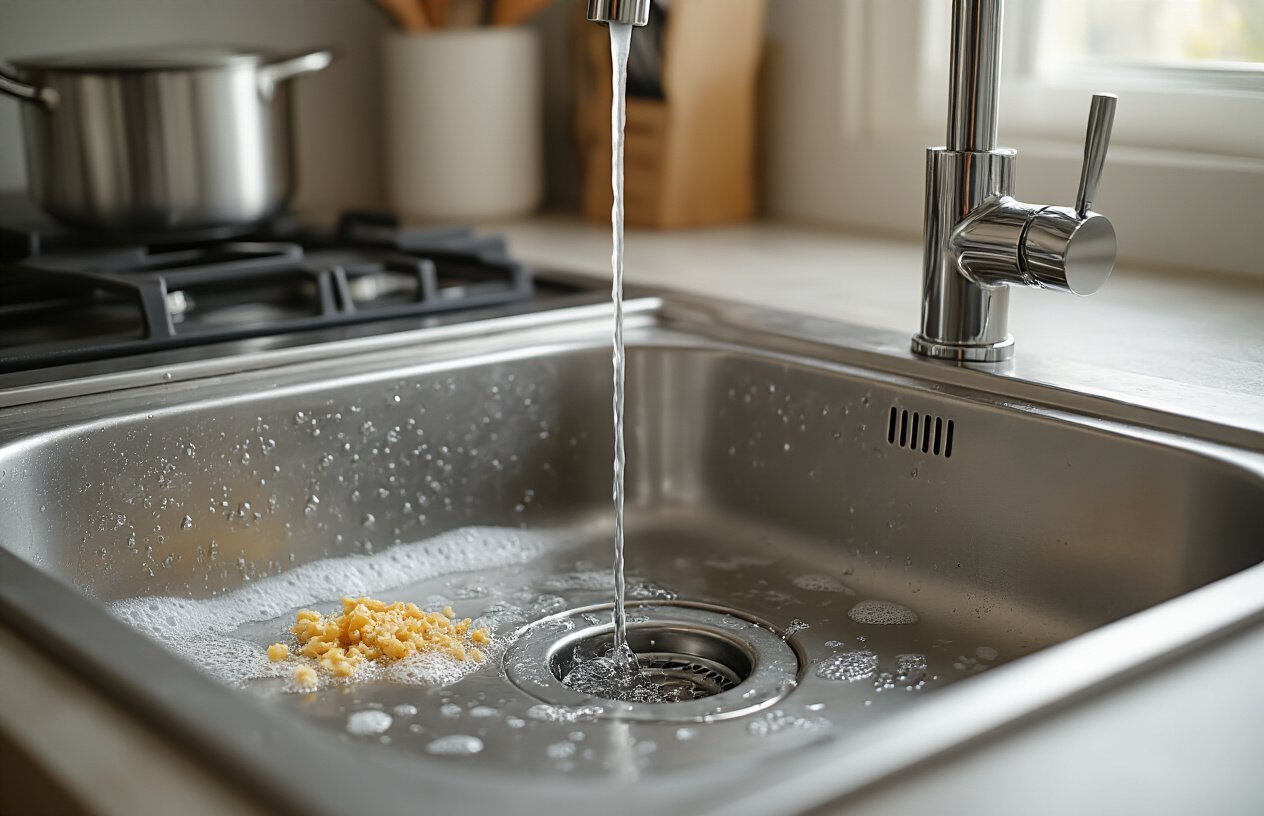
Water draining slower than usual
When your kitchen sink starts taking longer to drain, that’s your first red flag. You might notice water sitting in the basin for a few extra seconds after washing dishes, or the water level dropping at a snail’s pace. This happens because grease, food particles, and soap scum are starting to build up inside your pipes, creating a partial blockage.
Pay attention to how long it takes for water to disappear after doing dishes. If you’re standing there waiting for the sink to empty when it used to drain instantly, you’re looking at the early stages of a clog. Don’t ignore this warning – it only gets worse from here.
The slowdown usually starts gradually. One day you might think “that’s weird,” but then forget about it. A week later, you’re tapping your fingers on the counter, waiting for the water to go down. This is the perfect time to take action before you’re dealing with standing water and a completely blocked drain.
Gurgling sounds coming from the drain
Those strange bubbling and gurgling noises aren’t normal kitchen sounds. When air gets trapped in your pipes because of partial blockages, it creates these unsettling sounds as water tries to push past the obstruction. Think of it like drinking through a straw that’s partially blocked – you get those weird sucking sounds.
These noises often happen when you’re running water or right after you turn off the tap. You might hear them from the drain itself or even from nearby fixtures if your plumbing is connected. The sounds get louder and more frequent as the blockage grows bigger.
Some people mistake these sounds for normal plumbing noises, especially in older homes. But healthy drains shouldn’t gurgle. If your sink is making sounds like it’s having a conversation with you, it’s actually crying for help.
Unpleasant odors rising from the sink
Bad smells coming from your drain are like a neon sign screaming “blockage ahead!” These odors happen when food scraps, grease, and organic matter get stuck in your pipes and start rotting. The smell can range from mildly unpleasant to downright nauseating.
You might notice these smells most when you first turn on the water or during humid weather. The odor can smell like rotten eggs, spoiled food, or something that’s been sitting in a hot garbage can too long. Sometimes the smell comes and goes, but it always returns stronger.
Don’t try to mask these odors with air fresheners or by running extra water. The smell is telling you exactly what’s wrong – there’s decomposing matter in your pipes that needs to be cleared out before it creates a solid blockage.
Immediate 5-Minute Home Remedy Solutions
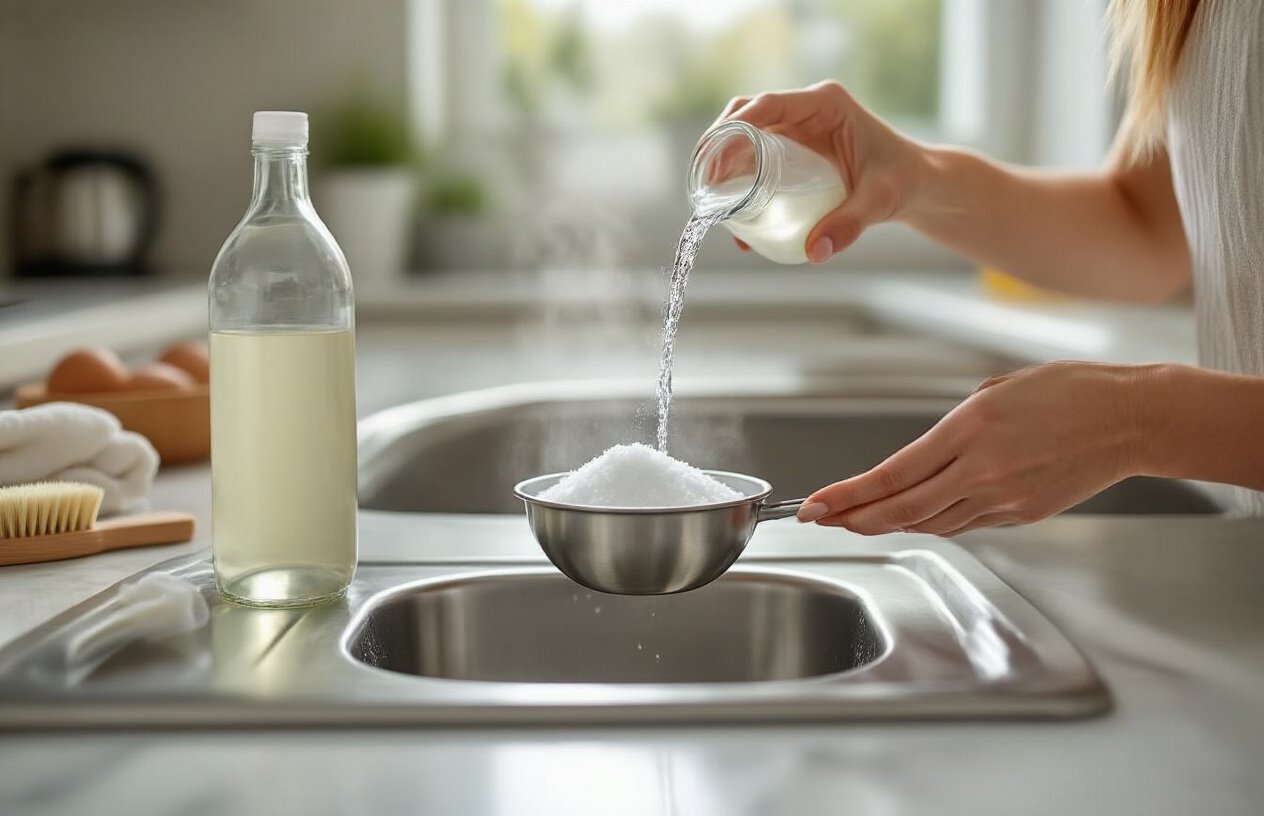
Hot water flush technique for grease dissolution
Grab the largest pot you have and fill it with water. Bring it to a rolling boil while you clear the area around your sink. The secret here is using maximum volume and heat – you want at least 8-10 cups of water heated to the highest temperature possible. Remove any dishes or debris from the sink first.
Pour the boiling water down the drain in one steady stream, not in small increments. The idea is to create enough heat and pressure to melt solidified grease and flush it through your pipes before it cools down again. Wait 30 seconds, then repeat the process two more times. This method works best for minor grease buildup and should show immediate results if the blockage isn’t too severe.
Baking soda and vinegar combination method
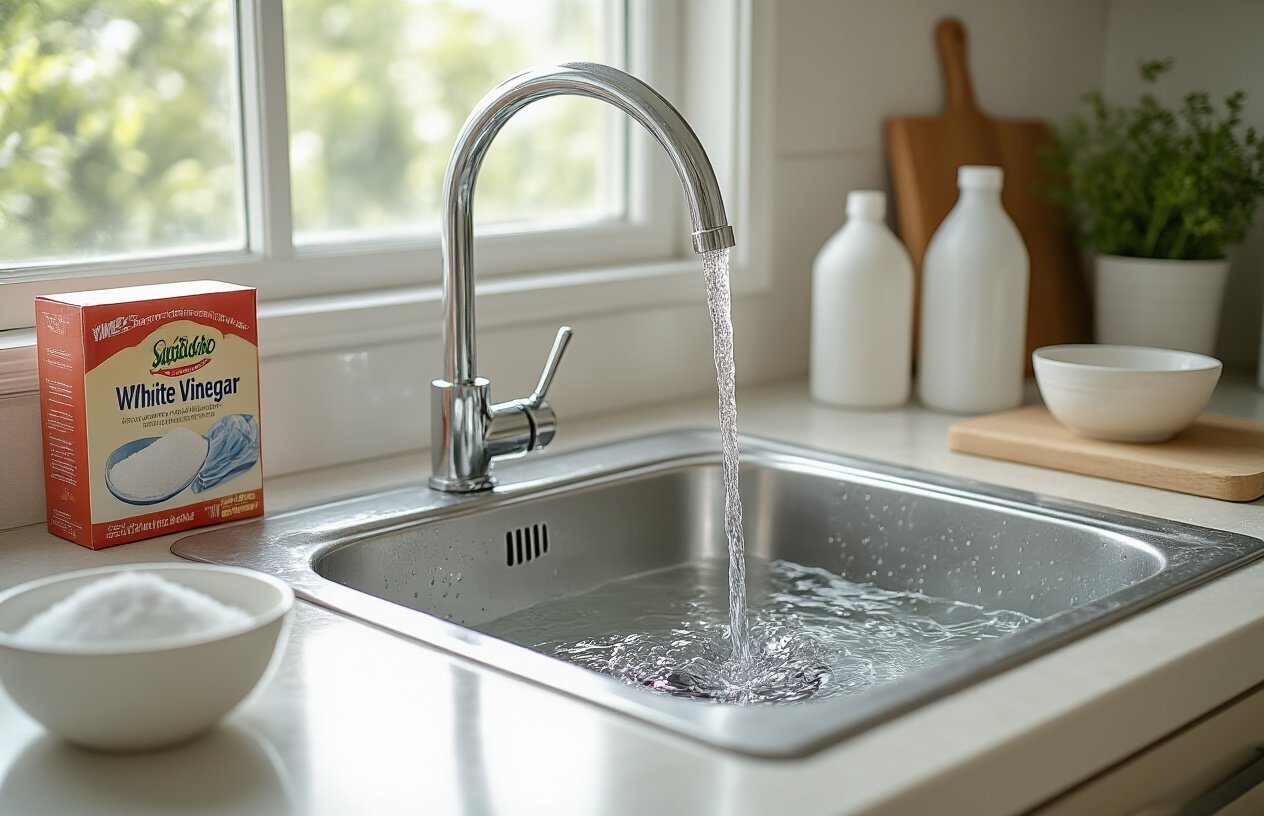
Start by pouring half a cup of baking soda directly down the drain. Make sure it goes down as far as possible by using a funnel or simply tilting your sink. Follow immediately with one cup of white vinegar – the reaction will start bubbling and fizzing right away, which is exactly what you want.
Cover the drain opening with a wet cloth or stopper to contain the reaction and force it deeper into the pipes. Let this mixture work for exactly 3 minutes. The chemical reaction breaks down organic matter and helps dissolve soap scum that traps food particles. After 3 minutes, flush with hot water from the tap for 30 seconds to wash away the loosened debris.
Dish soap and hot water treatment
Squeeze about a quarter cup of liquid dish soap directly down the drain. Choose a degreasing dish soap if you have one – Dawn or similar brands work exceptionally well. Let the soap sit for 2 minutes to penetrate the blockage.
While waiting, heat water to just below boiling point. You don’t need it absolutely boiling since dish soap works better at slightly lower temperatures. Pour the hot water slowly in a steady stream, allowing the soap to lubricate and break down the grease. This combination is particularly effective for food waste mixed with cooking oils. Run hot tap water for another minute to ensure everything flushes through completely.
Manual removal of visible blockages
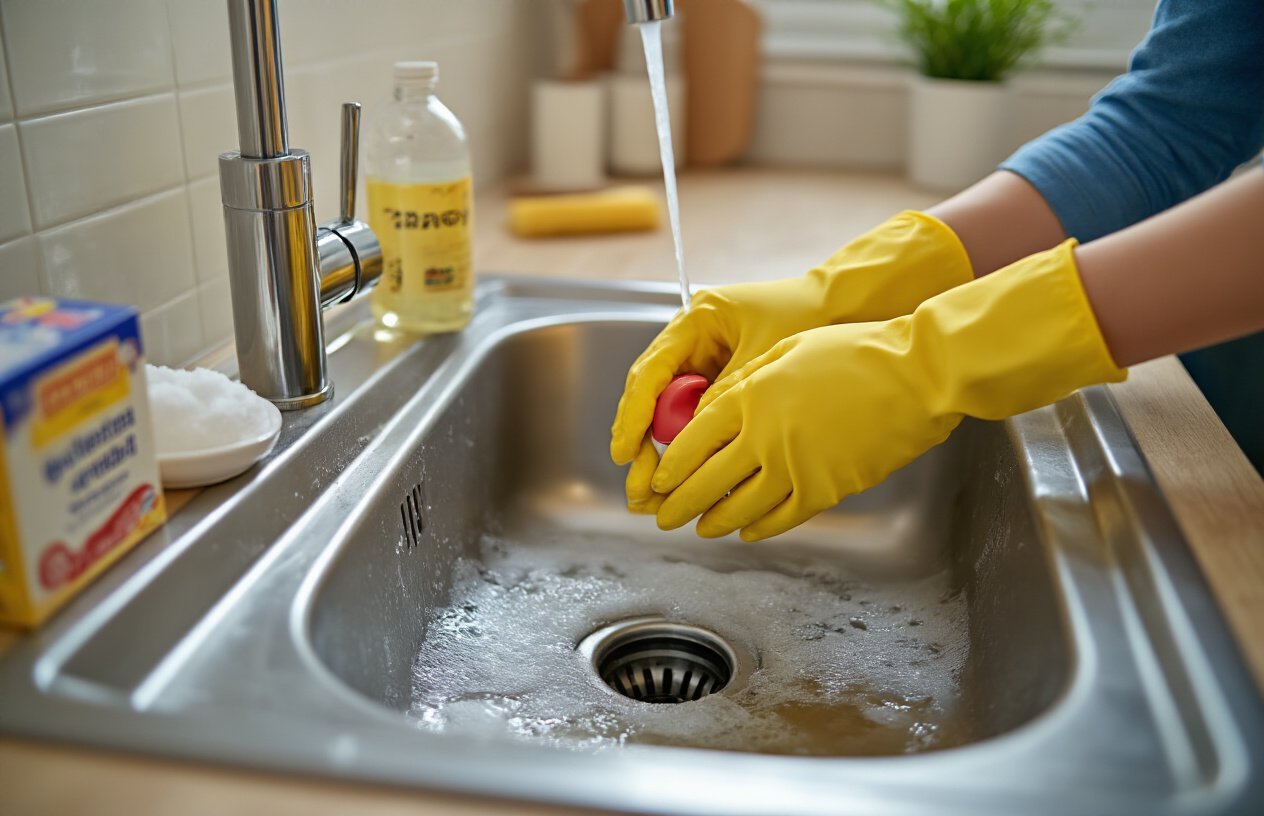
Put on rubber gloves and remove the sink strainer or stopper if possible. Many blockages happen right at the surface where you can actually see food particles, hair, or grease buildup. Use your fingers or needle-nose pliers to pull out any visible debris.
Check for objects that might have fallen down the drain – bottle caps, small utensils, or large food chunks that your garbage disposal couldn’t handle. Sometimes a simple manual removal is all you need, especially if the blockage formed recently. After clearing visible debris, rinse with warm water to check if normal drainage has returned.
Step-by-Step Emergency Drainage Fix Process
Safety Precautions Before Starting the Repair
Before you dive into fixing that stubborn kitchen sink, take a moment to protect yourself and your kitchen. Turn off the garbage disposal if you have one – you don’t want any nasty surprises while your hands are in the drain. Remove any standing water from the sink using a cup or bowl, and clear the area around your workspace.
Wear rubber gloves to protect your hands from bacteria and sharp objects that might be lurking in the pipes. Keep a flashlight handy since you’ll need to see what’s going on down there. Open windows or turn on the exhaust fan because some of the smells coming up won’t be pleasant.
Most importantly, never mix different chemical cleaners if you’ve recently used any store-bought drain products. This can create dangerous fumes that could harm you and your family.
Tools and Materials Needed from Your Kitchen
The beauty of this emergency fix is that everything you need is probably already in your kitchen. Grab a large pot for boiling water – you’ll need about 2-3 liters of hot water for this process.
From your pantry, collect baking soda (about 1 cup), white vinegar (1-2 cups), and regular table salt (half a cup). These three ingredients work together like magic to break down grease and food particles.
You’ll also need a plunger – specifically a cup plunger, not the flange type used for toilets. If you don’t have one, a wet cloth can work as a makeshift seal. Get some dish soap, preferably the grease-cutting kind, and a wire coat hanger or long-handled spoon for manual removal of visible blockages.
Keep some old towels nearby for cleanup, and have a bucket ready in case you need to catch any overflow water during the process.
Detailed Execution of the Quick Fix Method
Start by removing any visible debris from the drain opening using your hands or the straightened coat hanger. Don’t push anything deeper – just grab what you can see and pull it out.
Next, pour the half cup of salt down the drain, followed immediately by the full cup of baking soda. Make sure these dry ingredients go as far down as possible. Now comes the fun part – slowly pour the white vinegar down the drain. You’ll hear fizzing and bubbling sounds – this reaction is breaking down the grease and grime causing your blockage.
Let this mixture work its magic for exactly 15 minutes. Don’t rush this step because the chemical reaction needs time to dissolve the buildup. While you wait, heat your large pot of water to boiling.
After 15 minutes, carefully pour the boiling water down the drain in a steady stream. The hot water will flush away the loosened debris and reset your drainage system.
If water still drains slowly, repeat the process once more. For extra stubborn blocks, add a few drops of dish soap before the final hot water flush – this helps break down any remaining grease deposits.
Test your drainage by running cold water for 30 seconds. The water should flow smoothly without backing up or gurgling sounds.
Prevention Strategies to Avoid Future Kitchen Sink Blocks
Proper Disposal of Cooking Oil and Grease
Never pour cooking oil or grease down your kitchen sink. Hot oil might flow easily when liquid, but it solidifies as it cools, creating stubborn blockages in your pipes. Instead, let used oil cool completely and scrape it into the trash. For small amounts, wipe greasy pans with paper towels before washing them.
Save larger quantities of cooking oil in empty jars or containers and dispose of them with regular garbage. Some communities offer oil recycling programs, so check if your local waste management accepts used cooking oil. Create a simple grease trap by keeping an old coffee can near your stove specifically for collecting cooking fats.
Using Sink Strainers to Catch Food Particles
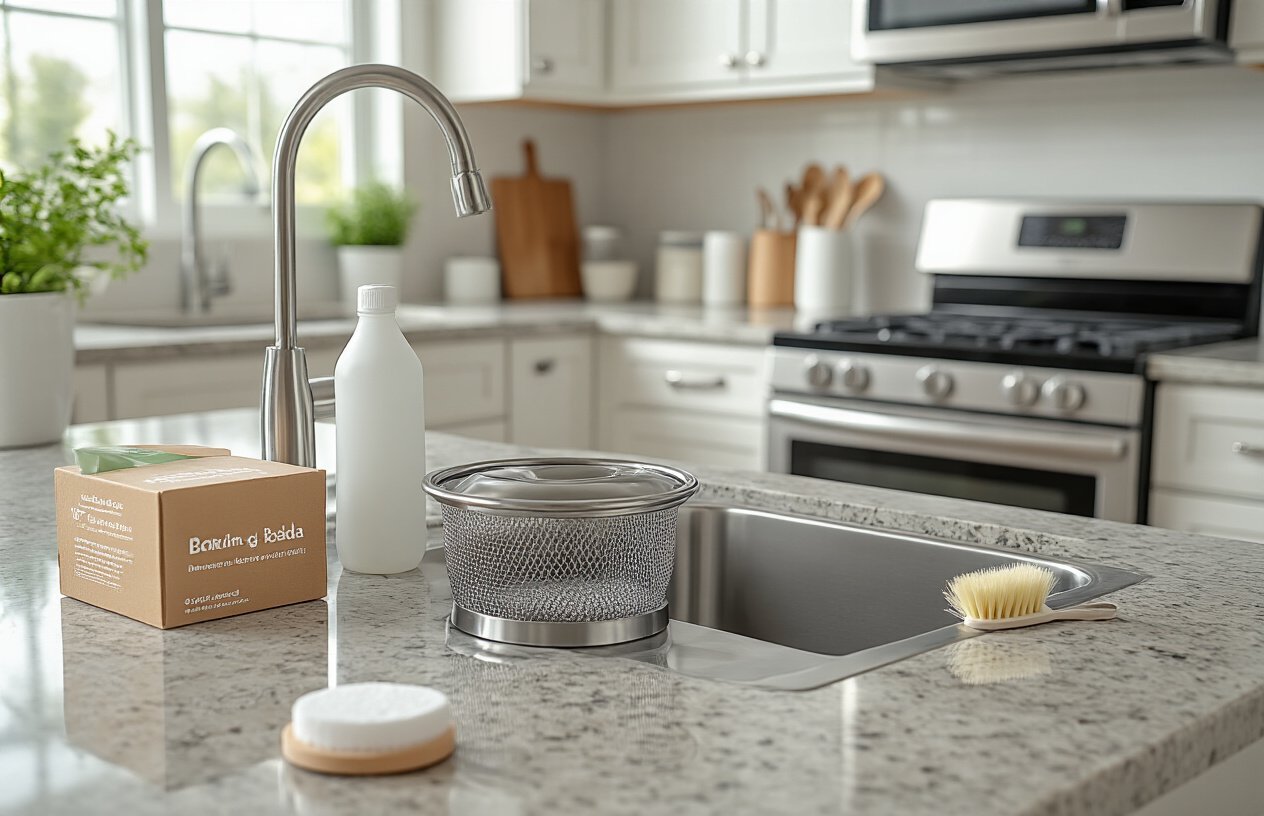
A quality sink strainer acts as your first line of defense against food particles entering your drainage system. Choose a fine-mesh strainer that fits snugly in your sink drain without gaps around the edges. Clean the strainer after each use, removing trapped food debris before it has a chance to decompose and create odors.
Replace worn strainers immediately when you notice tears or warping that might allow particles to slip through. Keep a backup strainer handy so you’re never without protection. For double sinks, install strainers in both drains since food particles can travel between connected pipes.
Regular Maintenance Cleaning Schedule
Establish a weekly cleaning routine to keep your drainage system flowing smoothly. Every seven days, flush your drain with hot water for 30 seconds to help dissolve any grease buildup. Monthly deep cleaning involves pouring baking soda followed by white vinegar down the drain, then flushing with hot water after 15 minutes.
Schedule quarterly professional inspections if you cook frequently or notice recurring slow drainage issues. Keep a maintenance log noting when you performed cleaning tasks and any changes in drainage performance. This helps identify patterns and prevents small problems from becoming major blockages.
Safe Cooking Practices That Protect Your Drainage System
Scrape plates and cookware thoroughly before washing to minimize food particles entering your sink. Use cold water when rinsing dishes with grease, as hot water melts fats that can solidify further down your pipes.
Avoid washing large food scraps, coffee grounds, or fibrous vegetables like celery down the drain. Pre-rinse dishes in a separate basin when possible, allowing food particles to settle before disposal. Install a garbage disposal only if your plumbing system can handle it, and use it sparingly for soft food waste only.
Keep a compost bin near your sink for organic waste instead of relying on your drainage system for disposal.
Kitchen sink blockages after cooking happen to everyone, and now you know exactly why grease, food particles, and soap buildup create those frustrating clogs. The warning signs like slow drainage and gurgling sounds give you a heads-up before things get worse, so you can act fast with simple home remedies using baking soda, vinegar, or hot water flushes.
The best part is that you don’t need expensive plumbers or harsh chemicals to fix most drainage problems. These 5-minute solutions work great for emergency situations, but remember that prevention beats cure every time. Make it a habit to scrape plates clean, avoid pouring oil down the drain, and run hot water after each cooking session. Your kitchen sink will thank you, and you’ll save money and stress in the long run.